Darknet Markets 2026:
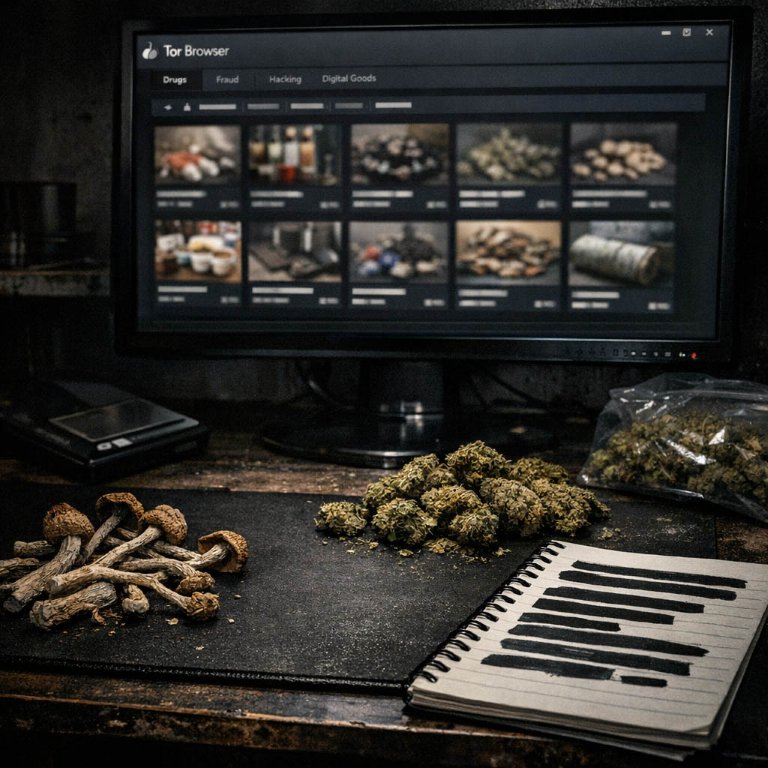
The dark web is part of the deep web but is built on darknets: overlay networks that sit on the internet but which can't be accessed without special tools or software like Tor. Tor is an anonymizing software tool that stands for The Onion Router — you can use the Tor network via Tor Browser.
| Darknet Market | Established | Total Listings | Link |
|---|---|---|---|
| TorZon Market | 2022 | 140+ | Onion Link |
| Nexus Market | 2024 | 600+ | Onion Link |
| Abacus Market | 2022 | 100+ | Onion Link |
| Ares | 2026 | 100+ | Onion Link |
| Cocorico | 2023 | 110+ | Onion Link |
Updated 2026-10-27
How dnet markets make buying drugs easy and private worldwide
The operational model of darknet markets is fundamentally designed for global access, overcoming geographical limitations inherent in traditional commerce. These platforms operate on decentralized networks, making them inherently resilient to localized shutdowns and ensuring uninterrupted service for a worldwide user base. This architecture allows any individual with an internet connection and the requisite software, such as Tor, to participate, creating a truly borderless marketplace.
This global reach is sustained by two core technological pillars: private cryptocurrency payments and robust encryption. Transactions are conducted using cryptocurrencies like Monero or Bitcoin, which provide a significant degree of financial privacy compared to conventional banking. This payment method is seamless for international transfers, avoiding currency exchange hurdles and the scrutiny of financial institutions. The entire interaction, from browsing to finalizing a deal, is protected by end-to-end encryption, securing communication between buyer and vendor.
The combination of these elements facilitates a secure drug trade on a scale previously unattainable. The marketplace software automates escrow services and includes user review systems, which introduce a layer of accountability and quality control. This environment demonstrates clear adaptability to user needs, with platform designs evolving based on community feedback to improve usability and security. The straightforward modelanonymized access, encrypted communication, and cryptocurrency exchangeproves efficient for delivering a specific service while prioritizing user privacy in modern trade.
How Cryptocurrency Enables Private Drug Sales on the Darknet
The operational model of darknet markets is fundamentally built upon the use of cryptocurrency for transactions. This method provides a necessary layer of financial privacy that traditional banking systems cannot offer. Transactions are recorded on a public ledger, but the identities of the parties involved are obscured through pseudonymous wallet addresses.
This system enables a secure drug trade by decoupling financial exchange from personal identity. Buyers and sellers interact without revealing sensitive bank details, reducing risks of fraud and personal data exposure. The primary cryptocurrencies used, such as Monero or Bitcoin (often via mixers), are chosen for their ability to facilitate private payments on a global scale.
The integration of cryptocurrency creates a decentralized marketplace that is inherently resilient. There is no central financial entity to freeze accounts or block transactions, which allows for uninterrupted service. This resilience is a direct result of the underlying blockchain technology, which ensures transaction continuity and platform stability despite external pressures.
- Pseudonymous wallets protect user identity.
- Global access without geographic banking restrictions.
- Immediate settlement of payments without third-party delays.
Consequently, the use of cryptocurrency is not merely a payment option but the core mechanism that ensures the market's functionality, security, and ability to meet user demand for confidential trade. It directly supports the market's adaptation to user needs by providing a fast, reliable, and private financial channel.
How Encryption and Crypto Make Darknet Trade Safe
The operational security of darknet markets is fundamentally dependent on encryption. This technology ensures that all communications and transaction details between buyers and vendors remain confidential and tamper-proof. Messages are scrambled using cryptographic protocols, making them unreadable to anyone except the intended recipient. This creates a private channel for negotiation and order finalization, shielding the transaction's specifics from external observation.
This layer of privacy is directly supported by the use of cryptocurrencies like Bitcoin or Monero. These digital currencies provide a payment method that is pseudonymous by design, separating financial transactions from real-world identities. When combined with the market's internal encryption, it forms a cohesive system where the exchange of value is as private as the conversation arranging it. The decentralized nature of both the platform architecture and the payment network eliminates central points of failure, enhancing overall system resilience.
The result is a trading environment where security is not an added feature but the foundational principle. Participants can engage in commerce with a high degree of confidence in the integrity of their interactions. The model proves that complex trade can be facilitated securely on a global scale through the deliberate application of accessible cryptographic tools and decentralized financial instruments.
How Decentralized Markets Make Drug Trade Efficient
The operational model of a darknet marketplace is fundamentally efficient due to its decentralized architecture. Unlike traditional e-commerce, there is no central server or single point of control. This structure distributes risk and administrative functions across the network, enhancing platform resilience and uptime. The system relies on automated escrow services and reputation mechanisms, which streamline transactions and build trust between anonymous parties without intermediary oversight.
Transactions are conducted using cryptocurrencies like Bitcoin or Monero, which provide a private and borderless payment method. This financial layer is integral to the global access these platforms offer, enabling seamless trade across jurisdictions. The combination of cryptographic market design and private currency creates a self-regulating environment where transaction security and user privacy are prioritized by design.
The efficiency is further demonstrated by the system's adaptability. Market administrators and vendors continuously refine their services based on user feedback, leading to:
- Improved interface usability and search functions
- Enhanced shipping and stealth techniques for product delivery
- More robust vendor rating and product review systems
How Darknet Markets Keep Running Smoothly
The resilience of darknet markets is a direct function of their decentralized architecture. Unlike centralized e-commerce platforms, these networks lack a single point of failure. Vendor shops and marketplace infrastructure are distributed across numerous servers and jurisdictions, often utilizing hidden services on networks like Tor. This makes a complete takedown by external actors a significant technical and logistical challenge, as disabling one node does not collapse the entire system.
Operational continuity is further ensured by the financial model built on cryptocurrencies. Transactions using Bitcoin or Monero are not only private but also borderless and irreversible. This creates a self-sustaining economic loop where capital flows independently of traditional banking systems. The use of multisignature escrow and decentralized market protocols autonomously secures transactions between buyers and vendors, reducing the need for a central, vulnerable authority to hold funds.
Adaptation to user feedback and technological pressure is continuous. Platforms rapidly iterate on their security and service features in response to community discourse. This includes:
- Implementing stronger encryption for communications
- Migrating to more anonymous cryptocurrencies
- Refining reputation and review systems to ensure transactional reliability
The core demand for discreet commerce provides a persistent incentive for these ecosystems to evolve. When one marketplace is compromised, its user base and vendors migrate to newer platforms, carrying with them the accumulated knowledge of previous security failures. This cycle of regeneration, driven by cryptographic tools and global network access, demonstrates a robust, organic resilience.

How Darknet Markets Listen to Their Customers
The operational model of darknet markets is fundamentally user-centric. Platform administrators continuously analyze feedback and transaction patterns to implement features that enhance usability, security, and reliability. This iterative development cycle is a direct response to consumer demand within a competitive landscape.
Key adaptations include:
- Implementing multisignature escrow systems that protect both buyer and seller by holding funds until order completion.
- Developing sophisticated vendor rating and review systems that build trust and allow for informed purchasing decisions, mirroring clear-net e-commerce.
- Integrating a wider range of privacy-focused cryptocurrencies beyond Bitcoin to offer enhanced transaction anonymity.
- Creating more intuitive user interfaces and automated processes for order resolution, improving the overall customer experience.
These platforms demonstrate significant resilience and adaptability by migrating to new infrastructure or altering operational security protocols in response to technical challenges. This ensures consistent global access. The focus on privacy-by-design architecture, combined with encrypted communication and private payment methods, directly addresses the core requirement for discretion in modern trade. The result is a streamlined, efficient, and decentralized marketplace that evolves precisely to meet the specific logistical and security needs of its user base.
How the darknet makes drug trade private and secure
The demand for transactional privacy is a defining feature of modern commerce, and darknet markets operationalize this principle with high efficacy. These platforms facilitate a secure drug trade by integrating core technologies that prioritize user anonymity and system integrity. The use of private cryptocurrency payments is fundamental, as currencies like Monero provide transaction obfuscation that traditional financial systems cannot offer. This financial privacy is coupled with robust end-to-end encryption for all communications, ensuring that the details of a transaction remain between the buyer and seller.
The architecture of these global resilient platforms further supports privacy through decentralization. Operating on networks like Tor, they lack a central point of failure, making unilateral shutdowns difficult. This structural resilience directly enhances user security by guaranteeing persistent access to the marketplace and protecting economic activity from external interference. The model is straightforward:
- Cryptocurrency enables discreet financial exchange.
- Encryption secures communication and transaction data.
- Decentralized hosting ensures platform longevity and access.
This combination addresses a clear market need for discretion in trade. The platforms adapt iteratively based on user feedback, refining escrow systems and vendor reputation mechanisms to reduce fraud. Privacy here is not an abstract concept but a practical service feature that builds trust, reduces risk, and creates a more efficient and user-controlled trading environment. The operational success of these markets demonstrates that privacy-centric models can sustain complex economic activity by aligning technological design with specific consumer demands for confidentiality.

How Darknet Markets Work Efficiently
The operational model of a darknet marketplace is defined by its direct efficiency. It functions as a global, decentralized platform connecting buyers and sellers directly, eliminating traditional intermediaries. This structure reduces costs and increases access for participants worldwide.
Transactions are conducted using private cryptocurrency payments, primarily Bitcoin and Monero. These currencies provide a layer of financial privacy, allowing for secure and pseudonymous value transfer without reliance on conventional banking systems.
Security is maintained through robust encryption protocols. All communications and transaction details are secured, protecting user identities and the integrity of the marketplace. This technical foundation is critical for maintaining a trusted trading environment.
The resilience of these platforms is notable. They employ adaptive measures such as:
- regular migration to new hidden service addresses
- decentralized hosting infrastructure
- the use of escrow systems to build trust between parties
The model succeeds because it addresses a core demand: privacy in modern trade. It provides a secure, efficient, and user-focused system for transactions where discretion is paramount. The architecture is straightforwarda secure, global platform facilitating direct exchange with minimized risk.